comparison
Best Fire Starters Compared: Magnesium Rods, Fatwood, Char Cloth, Wax Cotton, and Store-Bought Tinder
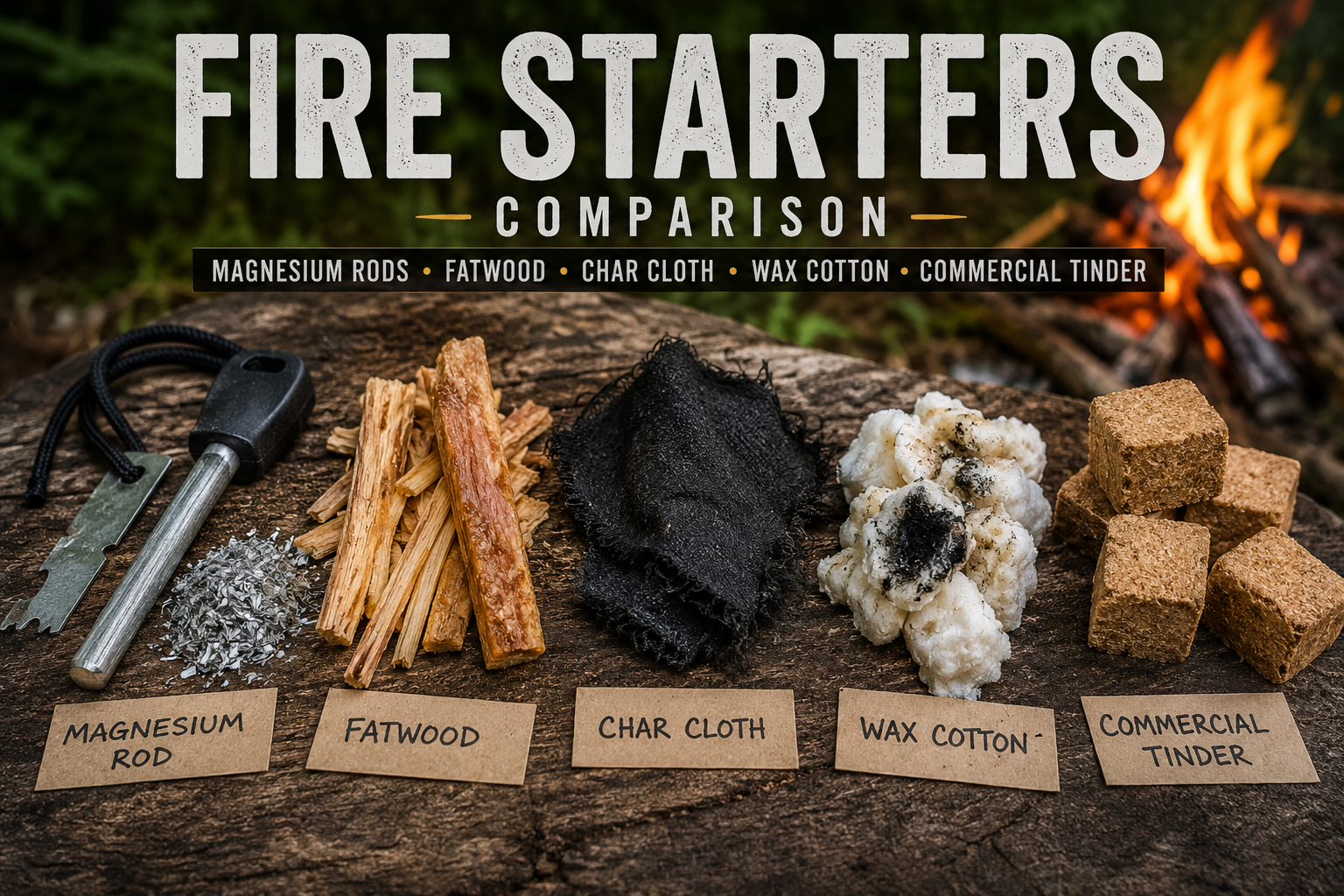
Fire starters all promise easy flames, but they do not behave the same in wet weather, cold hands, or real camp conditions. Here is a practical comparison of magnesium rods, fatwood, char cloth, waxed cotton, rotted-stump charcoal, and commercial tinder.
Fire Starters / product
Published: May 26, 2026 / Updated: Jun 6, 2026
Prices, availability, and product details can change. Check current details with the seller before buying.
Article
Overview
A good fire starter is not just about catching flame once on a sunny afternoon. It has to work when your hands are cold, the ground is damp, the wind is moving, and you are tired enough to make mistakes.
After seeing someone turn the soft, rotted edge of an old stump into ember-catching charcoal, I started thinking about how many “fire starters” are really just different ways to solve the same problem: catch a spark, hold heat, and give your kindling enough time to take over.
Some options are old-school and cheap, like char cloth, fatwood, waxed cotton, or homemade tinder from natural materials. Others are packaged, branded, and sold as survival gear. But after comparing the main types, the humble magnesium rod still earns my top pick because it is durable, weather-resistant, compact, and dependable when paired with the right tinder.
Magnesium rod
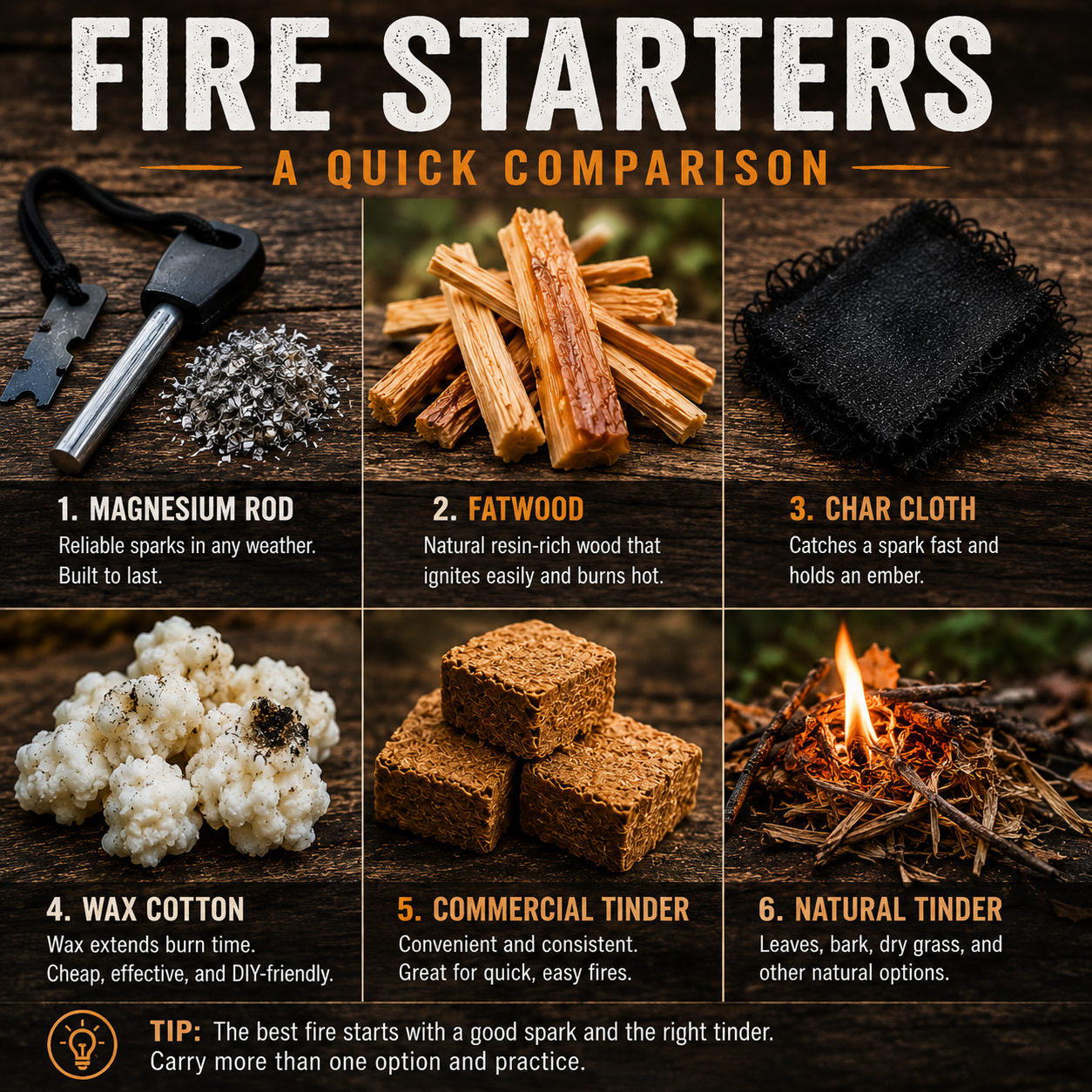
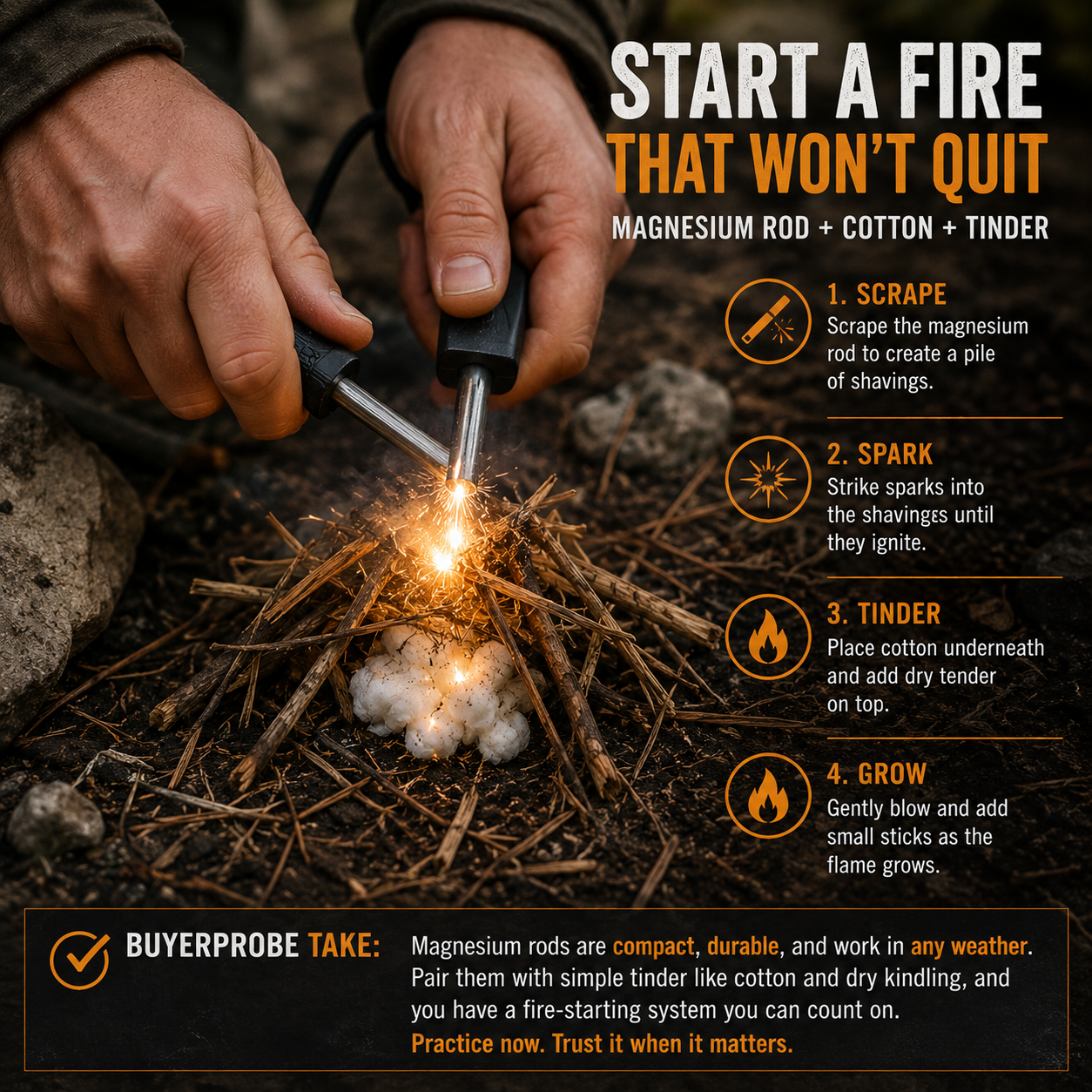
A magnesium rod is not tinder by itself in the normal sense. You scrape off magnesium shavings, then strike sparks into the pile. Once those shavings ignite, they burn extremely hot and can help light marginal tinder.
The big advantage is reliability. A magnesium block or rod does not leak, dry out, evaporate, or get used up quickly like many packaged starters. It is also small enough to live in a pack, tackle box, truck kit, or emergency bag.
The downside is that it takes practice. You need a stable pile of shavings, dry tinder nearby, and enough patience not to scatter your work with one bad strike.
Best for: survival kits, camping, bushcraft, emergency bags
Weakness: slower than a lighter or pre-made tinder if you have not practiced
BuyerProbe take: still the winner for long-term reliability
Fatwood
Fatwood is resin-rich pine wood. It lights easier than ordinary sticks because the natural resin acts almost like built-in fuel. A few curls or shavings can catch a spark or flame and burn long enough to help kindling start.
It is one of the best natural fire starters because it stores well, smells good, and can be shaved down with a knife. It is also easy to understand: scrape, feather, spark, burn.
The only real drawback is that not all fatwood is equal. Some pieces are dense and resin-heavy, while others are underwhelming. Brand and sourcing matter less than resin content.
Best for: camping, bushcraft, wood stove kits
Weakness: quality varies
BuyerProbe take: the best natural companion to a ferro or magnesium rod
Waxed cotton
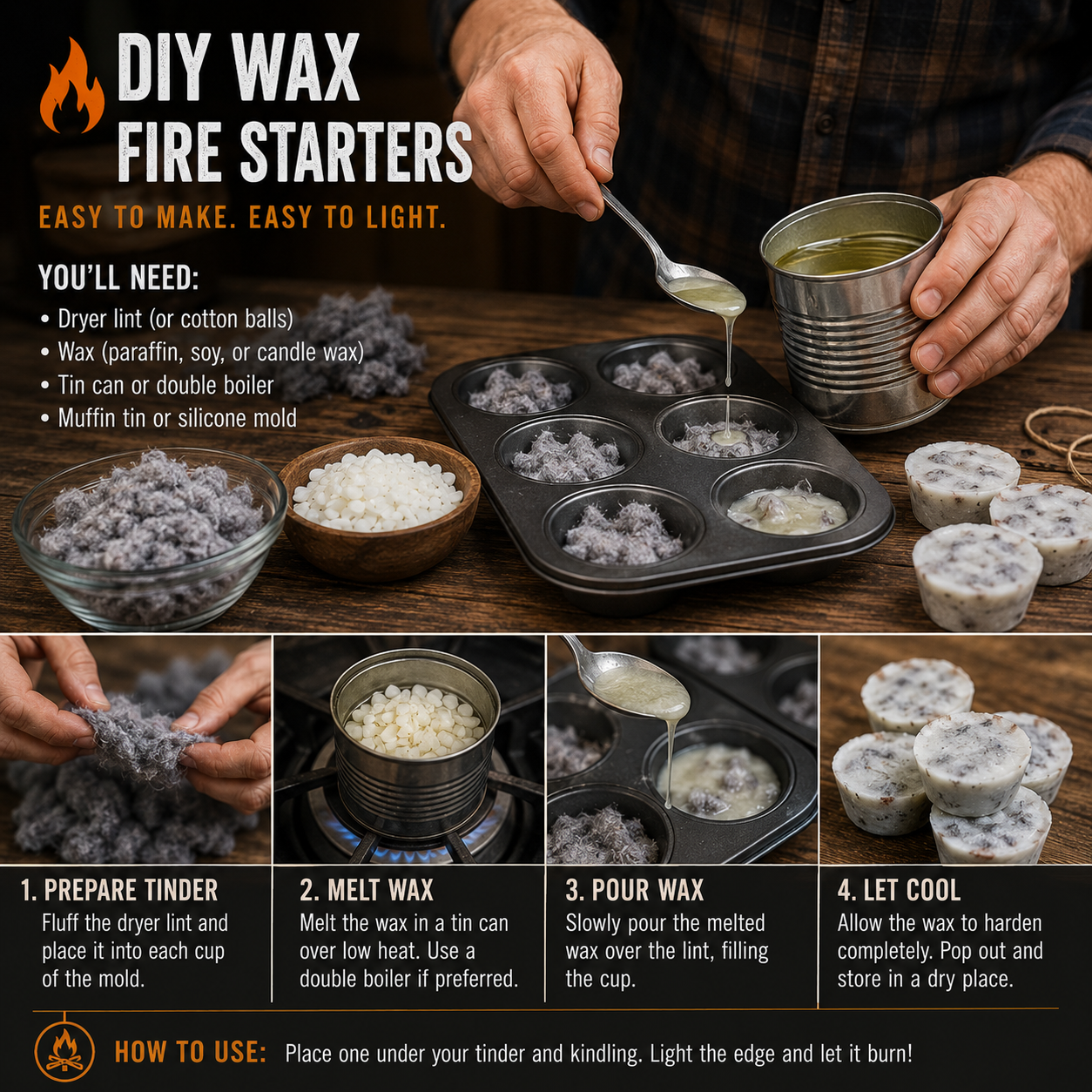
Waxed cotton pads are one of the most underrated DIY fire starters. Cotton catches easily, and wax extends the burn time. Makeup remover pads, cotton balls, or cotton wipes can all work if treated with wax or petroleum jelly.
Your story about saving wax-cleaning cotton wipes is actually a great real-world example. It is not glamorous survival gear, but it works because it combines absorbent fibers with slow-burning fuel.
The downside is mess. Waxed cotton can get greasy, attract lint, and needs to be stored in a bag or small tin.
Best for: cheap homemade fire kits
Weakness: can be messy
BuyerProbe take: one of the best budget backups
Char cloth
Char cloth is made by heating cotton fabric in a low-oxygen container until it carbonizes. It catches a spark very easily and forms a glowing ember.
It is excellent for primitive fire-starting, flint and steel, ferro rods, and controlled spark work. But char cloth does not make a fire by itself. It needs to be transferred into a tinder bundle and blown into flame.
That makes it useful, but slightly more skill-based than waxed cotton or fatwood.
Best for: traditional firecraft, ember-starting
Weakness: needs a tinder bundle
BuyerProbe take: great for skill builders, less ideal as the only fire starter in an emergency kit
Rotted-stump charcoal / punk wood
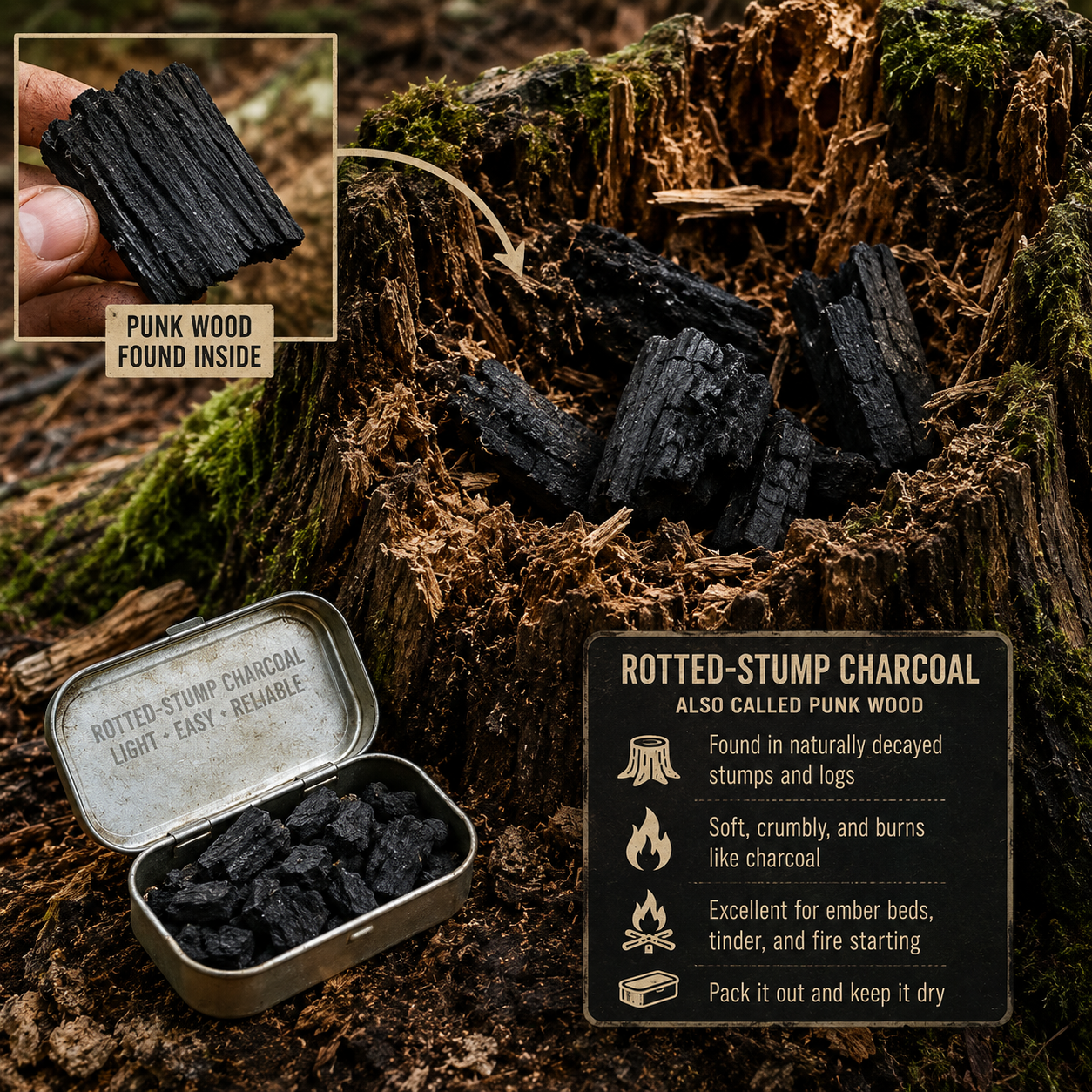
Soft, rotted wood from an old stump can be charred into a material similar to char cloth. Bushcraft people often call this punk wood. Once charred, it can catch a spark and hold an ember.
This is a great survival skill because it teaches you how to create ember-catching material from the environment. But it is not as convenient as carrying prepared tinder.
Best for: bushcraft practice, primitive fire methods
Weakness: requires prep and the right wood
BuyerProbe take: impressive and useful, but not better than carrying a proven starter
Commercial fire starters
Store-bought fire starters vary a lot. Some are wax cubes, some are compressed sawdust, some are cotton-based, some use resin or chemical fuel, and some are basically overpriced versions of things you can make at home.
The upside is convenience. They are usually easy to light and burn long enough to start a campfire.
The downside is that many are bulky, disposable, and brand-dependent. Once they are gone, they are gone.
Best for: casual camping, fireplaces, quick campfires
Weakness: consumable and often overpriced
BuyerProbe take: convenient, but not always the best value
Final recommendation
For a real-world kit, I would not carry only one fire starter. The best setup is layered:
Carry a magnesium rod or ferro rod as the long-term ignition tool. Pair it with fatwood shavings or waxed cotton for fast flame. Add char cloth or charred punk wood if you enjoy primitive fire-starting or want an ember-based backup.
A lighter is still worth carrying, but it should not be your only answer. Lighters can break, leak, freeze up, or get lost. A magnesium rod may take more effort, but it is hard to beat when you want something that can sit in a pack for years and still work.
Bottom line: commercial fire starters are convenient, fatwood is excellent, waxed cotton is cheap and effective, and char materials are great for catching embers. But for durability and long-term confidence, the magnesium rod still wins.
More BuyerProbe Reads
Keep Reading
hindsight / product
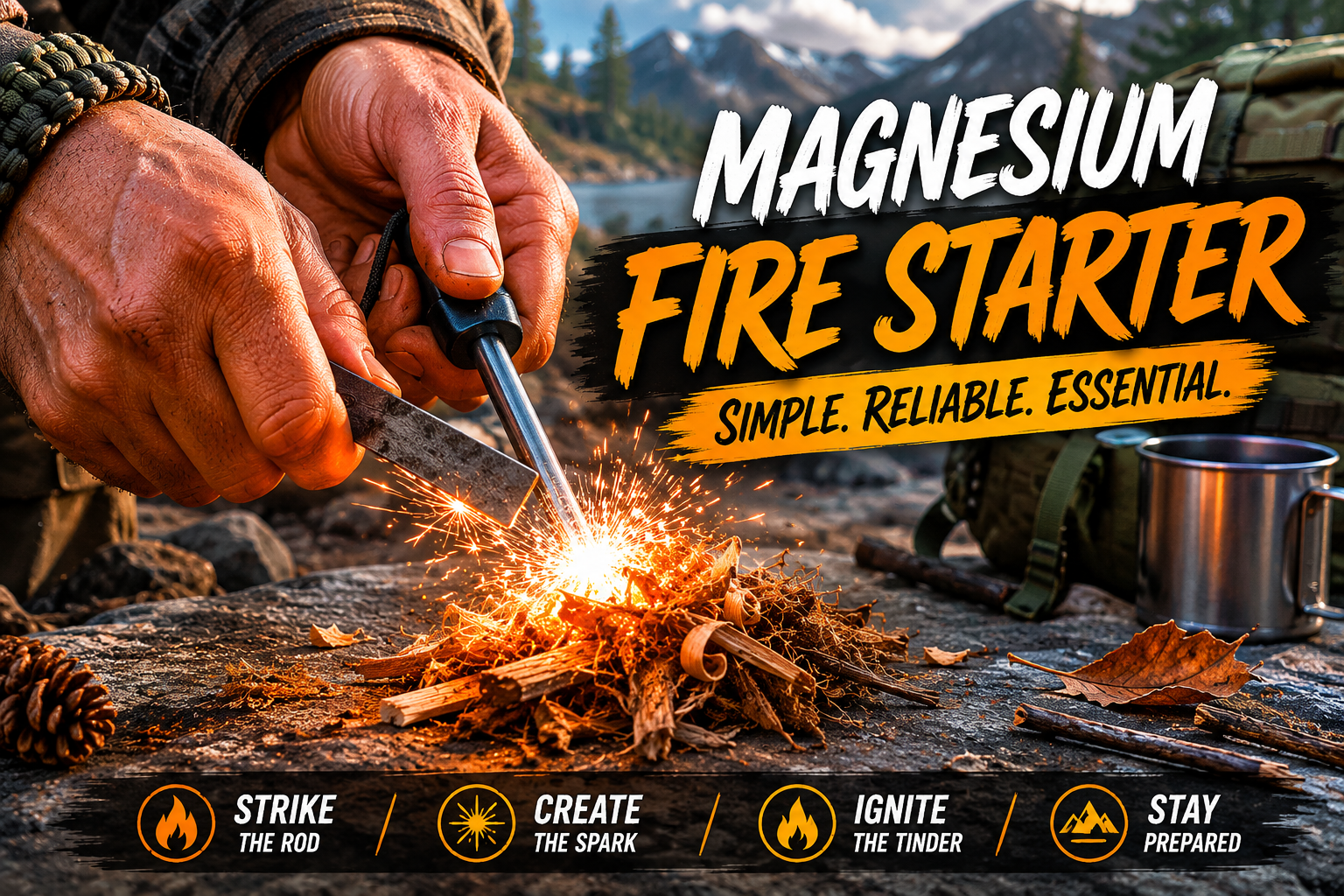
Hindsight: Why a Magnesium Fire Rod Belongs in Every Pack
A wet night on the Appalachian Trail showed one hiker how fast a lighter failure becomes a survival problem. Learn why a magnesium rod is a simple, reliable backup and what to watch for.
comparison / product
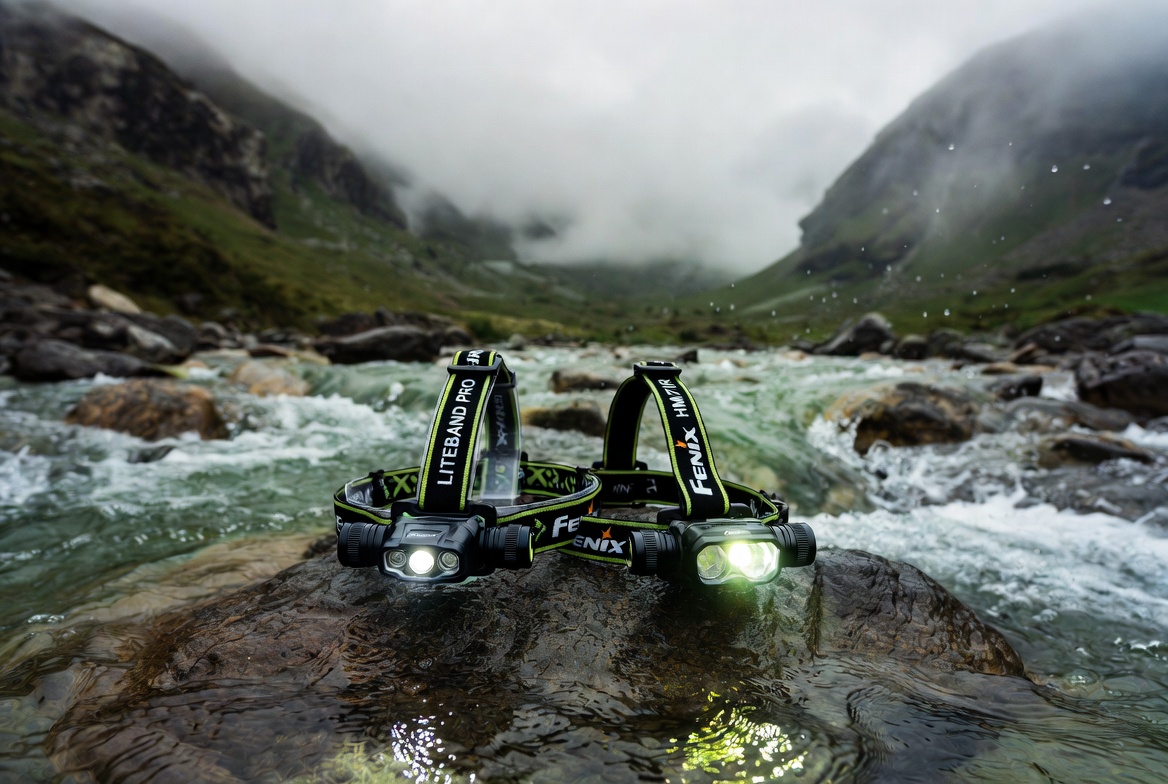
LITEBAND PRO vs Fenix HM71R: Which Rechargeable Headlamp Fits Your Work and Outdoors Needs?
A straight-up comparison of the LITEBAND PRO and the Fenix HM71R covering brightness, beam control, runtime, fit, and durability so you can pick the right headlamp for your tasks.

comparison / product
Patagonia Torrentshell 3L vs. Arc'teryx Beta SL: Which Rain Jacket Is Best for You in 2026?
A head-to-head comparison of two leading 3-layer rain shells that helps you match performance, weight, and price to your needs—commuting, hiking, or alpine missions.
review / product
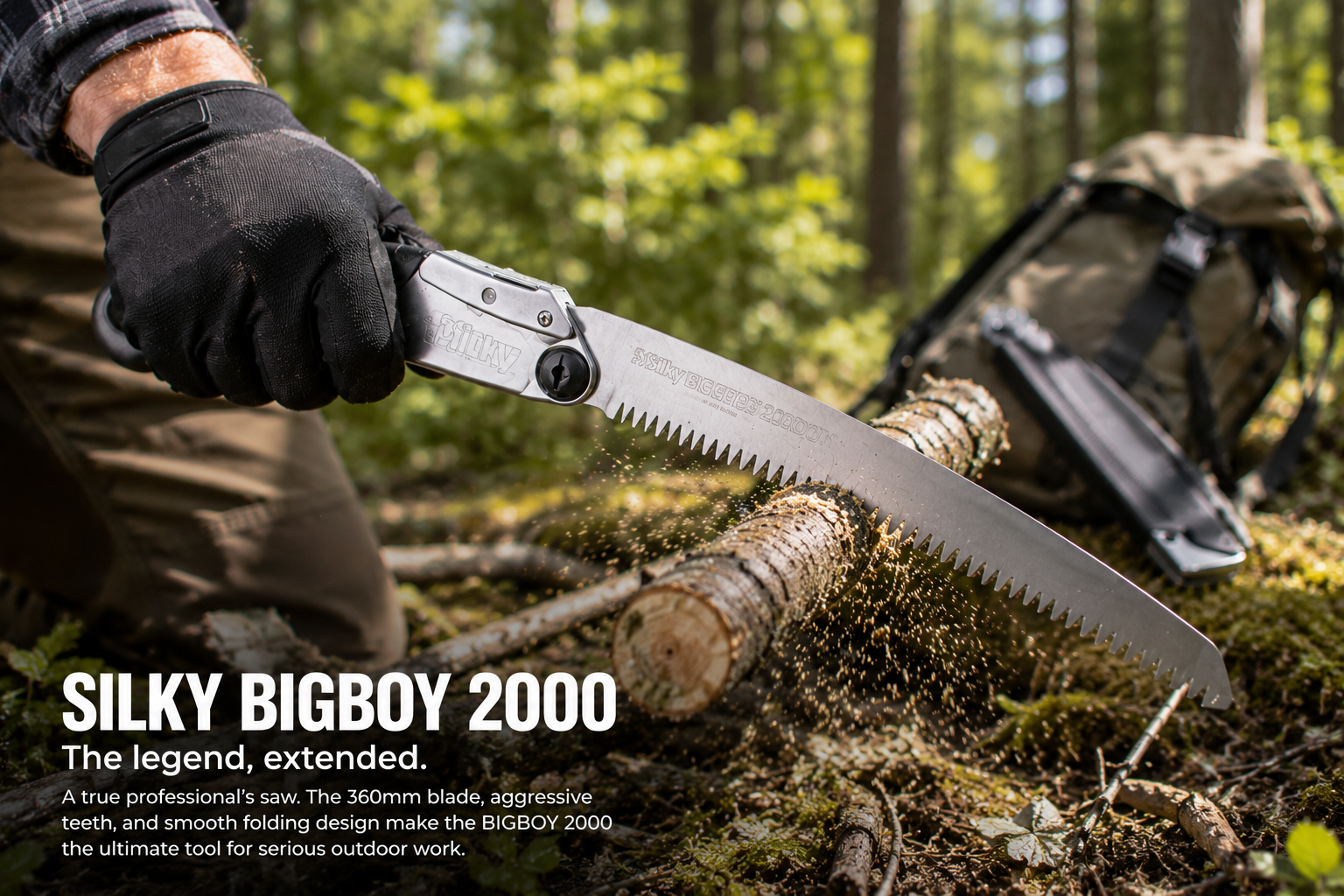
Silky Professional BIGBOY 2000 Folding Saw: durable, fast cutting for heavy yard and trail work
A practical look at the BIGBOY 2000 after a year of regular use. Learn what it handles well, its real limitations, and who should buy it.
review / comparison
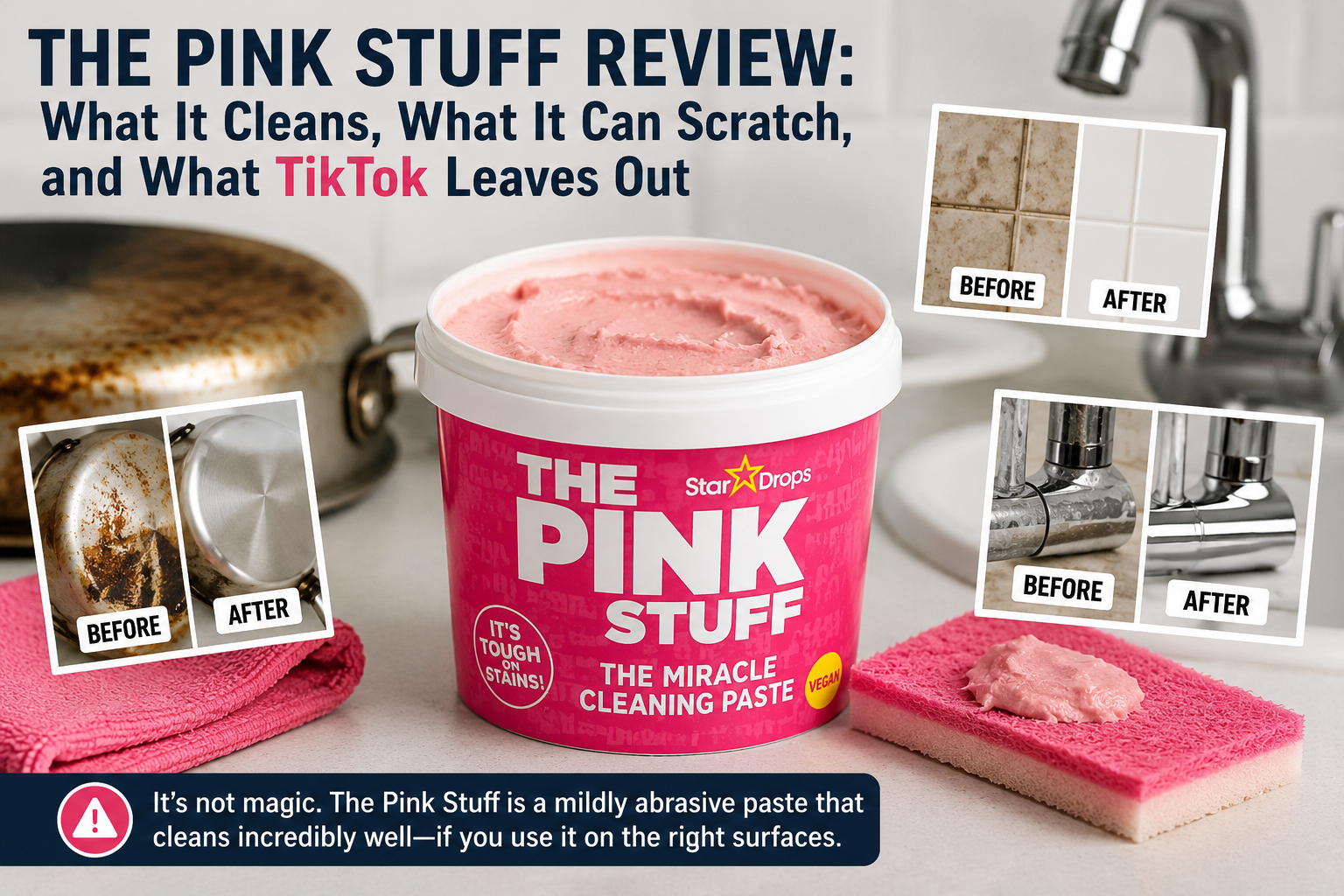
The Pink Stuff Review: What It Cleans, What It Can Scratch, and What TikTok Leaves Out
A practical look at The Pink Stuff Miracle Cleaning Paste and what viral videos do not show. Learn where it shines, where it risks damage, and better options for delicate surfaces.
mistakes / buying_guide
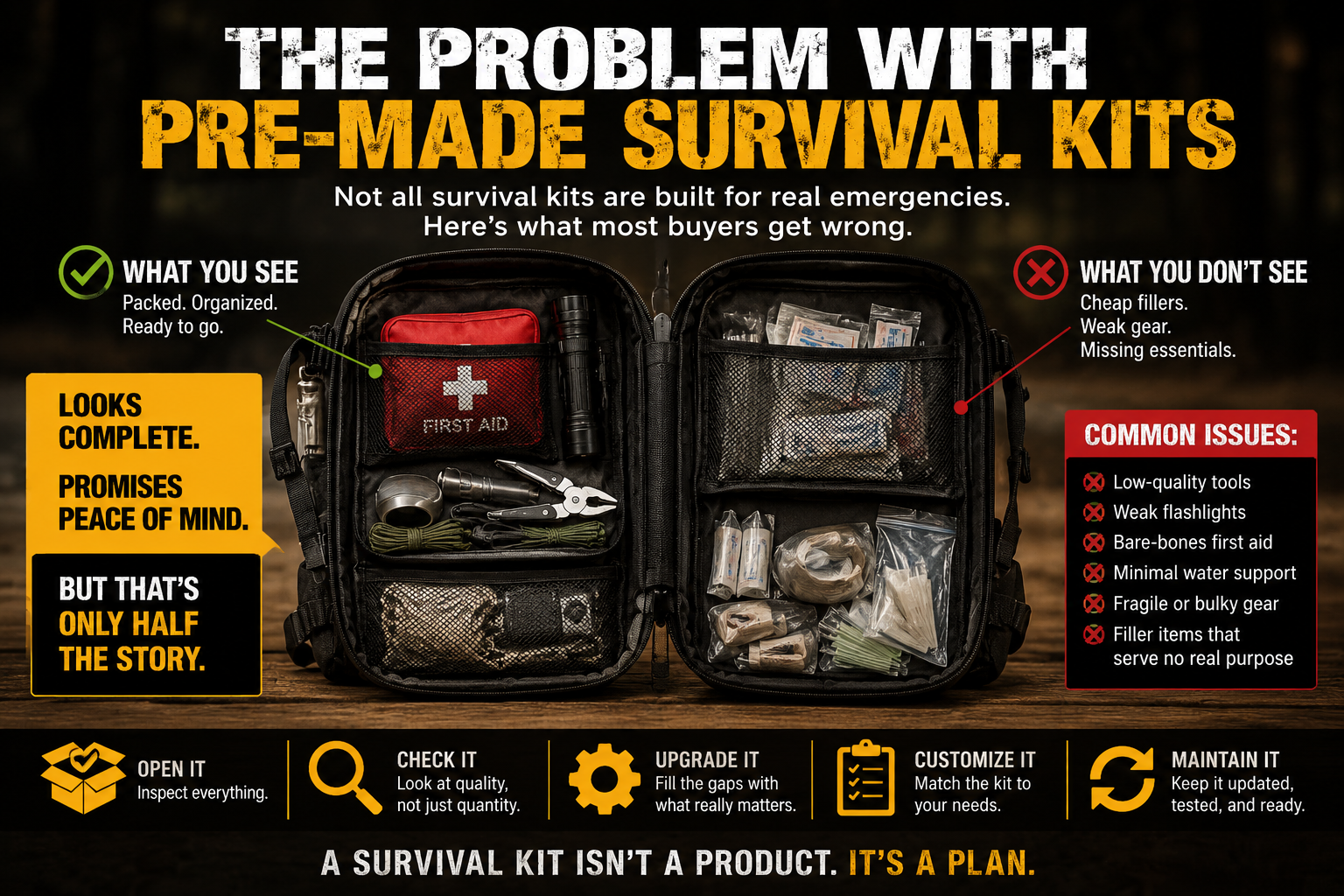
The Problem With Pre-Made Survival Kits
Pre-made survival kits can look like an easy fix for emergencies, but many prioritize shelf appeal over real usefulness. Learn what these kits miss, where they help, and how to vet one before you rely on it.

review / product
Smart glasses buying checklist: what to actually watch for
Smart glasses are tempting, but don’t buy on novelty. This checklist walks through the practical features and tradeoffs to check before you spend.
buying-guide / buying_guide
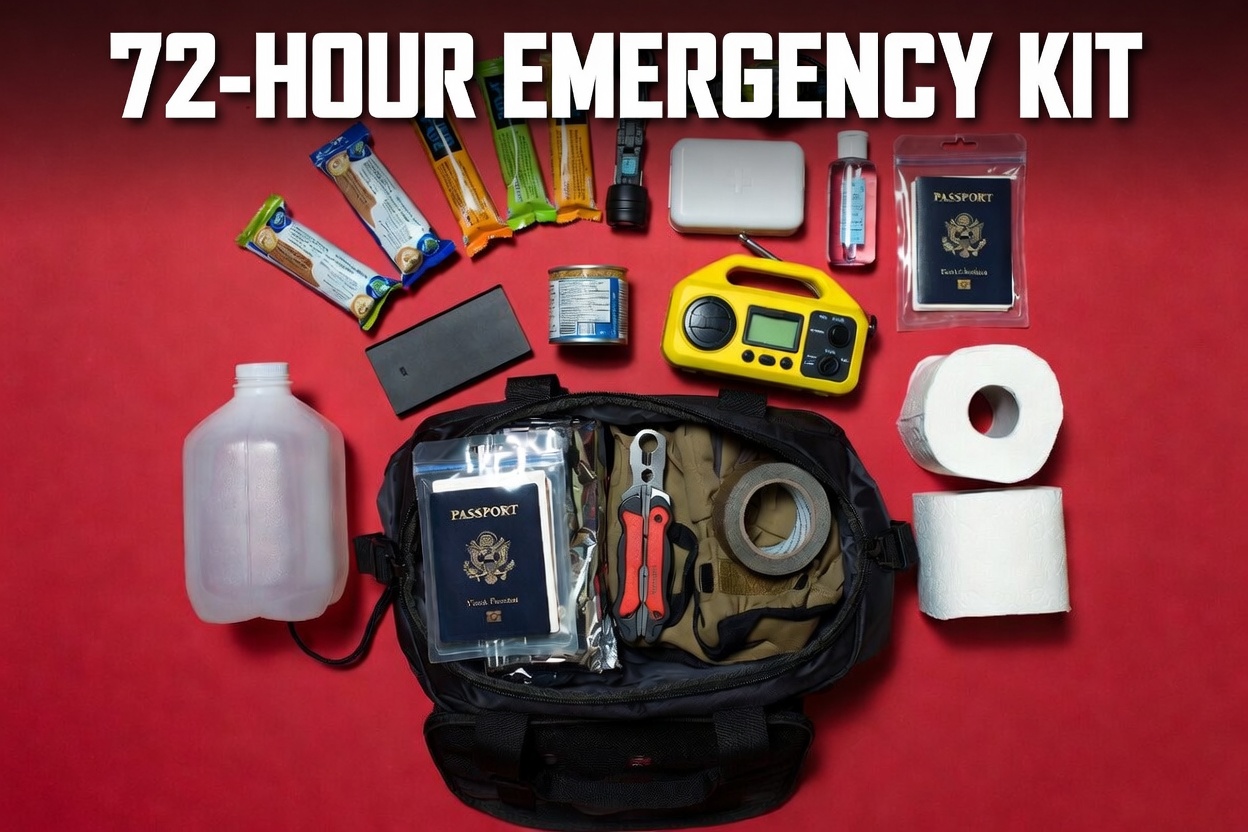
What to Pack in a Practical 72-Hour Emergency Kit
How to build a real 72-hour emergency kit that covers water, food, warmth, hygiene, tools, and meds without filler items that waste space. Learn what to prioritize and what low-value extras to skip.